Gary
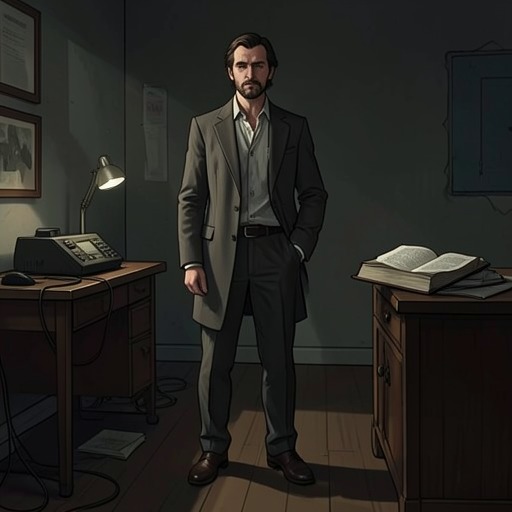
Bird BoxGary enters the Shillingham house community as a stranger whose request for shelter forces its members to weigh compassion against risk. Initially accepted after a vote, he later becomes the focus of suspicion when Malorie reads Frank's notebook and recognizes in it an argument for his own immunity and the inferiority of the others. The household expels him, but Malorie's later discovery that he has been hiding in the cellar shows that exclusion has not removed the danger he represents.
Identity and Introduction
Gary first makes himself known from outside the house, giving his name when Tom calls out. Before the household can meet him, it must decide whether to admit him. The people inside debate the request, and the exchange makes clear that Gary's arrival is not an ordinary act of hospitality: opening the door means taking a risk in a world where people fear what they might see and cannot easily distinguish a harmless stranger from a threat.
The community's precautions and limited resources shape its response. When a prospective entrant confirms that her eyes are closed, Tom looks to Don, and Don objects that the household cannot afford more mouths to feed. The episode establishes a context in which newcomers are judged both as potential dangers and as additional dependants. Gary's own admission is also preceded by hesitation: Tom tells him that the household is still talking the decision over, then calls for a vote.
Gary is admitted after that vote. Felix supports letting him in, and Jules nods in agreement. The decision is provisional rather than an expression of unquestioning trust; the members have listened to the request, but they remain alert to the possibility that someone outside may be dangerous. Gary therefore enters a community whose welcome is conditional from the outset.
The Former Refuge and Gary's Account
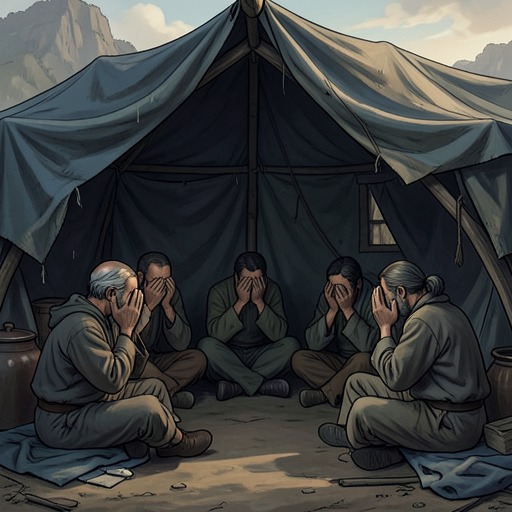
Once inside, Gary offers to describe his experience at his former place, warning that it is a dark account. He explains that he and the people there had not gathered in response to a newspaper advertisement and were not as young as the residents of the Shillingham house. In his telling, they lacked both a communal sensibility and a shared commitment to group effort, a contrast that makes the current household's collective decision-making especially significant.
Gary says his brother Duncan had a friend, Kirk, who took the Russia Report seriously early on. Gary presents Kirk's belief as entangled with conspiracy theories and paranoia about the government or other forces targeting people. Gary, by contrast, describes himself as having resisted the reality of the crisis: even after it began, he says, he sometimes could not believe what was happening, because he was over forty and accustomed to his old life. It was Kirk's certainty that prompted Duncan to call Gary and suggest gathering at Kirk's place for a few days, or until they learned more.
This story establishes that Gary's first response to the new world was resistance, while also showing how he frames himself against the people around him. His account begins as a report about a failed or troubled group, but it also supplies the background to his later contempt for communal fear. The belief system recorded in Frank's notebook turns that contrast into a hierarchy: Gary casts himself as intellectually exceptional and the other survivors as minds too limited to endure.
Frank's Notebook and Gary's Claims
The notebook's unusual, meticulously arranged writing gives Malorie reason to keep reading. Its sentences run in different directions across the pages—left to right, right to left, and downward—before forming spirals and patterns. The physical organization of the writing makes its contents feel deliberate rather than like a casual record, and its claims expose the outlook Gary has not openly declared to the household.
In the passage Malorie reads, the writer argues that each person's mental capacity sets a different limit on how the creatures can be comprehended. He divides people into those supposedly capable of understanding the creatures and those he derides as lesser minds, and asserts that the latter will not survive. The passage concludes by claiming that the writer has already proved his point. The argument offers a supposed explanation for survival, but its self-congratulation and contempt reveal Gary's conviction that he stands above the ordinary rules others must follow.
Another passage attacks people who hide behind blankets and blindfolds, describing them as the majority who have accepted that seeing the creatures will make them go mad. This challenges the household's central survival practice, but does not establish that Gary is actually immune. Instead, the writing shows that he interprets the community's fear and precautions as evidence of weakness, and treats his own survival as proof of superiority. The gap between a claim of exceptional understanding and a demonstrated, reliable immunity remains crucial: the notebook discloses Gary's conviction, not that the conviction is true.
Exposure and Expulsion
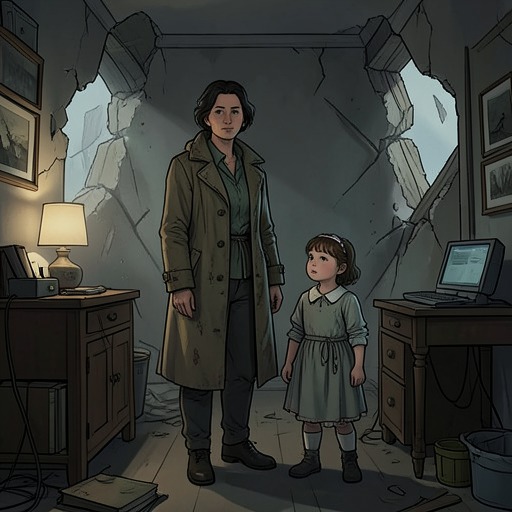
Malorie's discovery of the notebook brings the household's conflict with Gary into the open. When she confronts him, he turns toward her and, in a theatrical, gentlemanly manner, calls her a snoop. As the other members react—Felix asks for the notebook, Cheryl asks when Malorie found it, and Don points at her and yells—Gary insults Malorie. Jules moves against him, the dogs bark, and Tom steps between the participants and tries to stop the confrontation.
The argument changes the question before the household. The issue is no longer simply whether an unfamiliar man deserves shelter; the group must decide what to do with a person whose private writing denigrates its members and rejects the rules on which their survival depends. Malorie tells Gary he cannot stay and must leave. Don initially protests that Gary is explaining himself, but the notebook has already altered the balance of the discussion. Don's expression changes from anger to confusion as he reads it, while Felix openly challenges Don's defense of Gary.
Gary rises, returns Frank's notebook to his case, and asks Tom for one of the helmets, appealing to him as a neighbor. Tom agrees quietly. The request gives the departure a practical, restrained detail: although the household has rejected Gary as a member, Tom still provides protective equipment for him to take. Gary's removal from the house is thus not a simple restoration of trust or an unqualified act of hostility; the community's decision is to exclude him while retaining a measure of concern for his immediate safety.
Hidden Presence and Narrative Significance
Gary's expulsion does not settle the threat he poses. Later, during the crisis at the house, Malorie opens her eyes and understands who is standing with her in the attic. She identifies Gary and recognizes that he has been hiding in the cellar. The revelation confirms that he remained within the house after the community had ordered him to leave, turning the earlier decision into a source of continuing peril.
The discovery also links Gary to the house's earlier, unresolved suspicions: Malorie thinks of Victor growling at the cellar door and of Don sleeping below. The evidence establishes Gary's concealed presence, but not every detail of how long he has been there or what he did while hidden. What it does make clear is that the household's formal decision failed to remove him from its shared refuge. The cellar, a place of concealment within the protected house, becomes the point at which exclusion and intrusion meet.
Even as Malorie rows away, Gary remains part of the danger she imagines may still be out in the world, watching her and the children move down the river. The possibility is framed as her fear, not as confirmation that he is pursuing them. In this way, Gary's narrative function extends beyond his arguments about the creatures: he embodies the human uncertainty that persists even when the windows are covered and the eyes are shut. The creatures are the acknowledged external threat, but a person once admitted as a neighbor and then found concealed inside the house complicates the boundary between safety and danger.